
Customs Delivers Lecture on Emerging Threats in Cross Border Trade
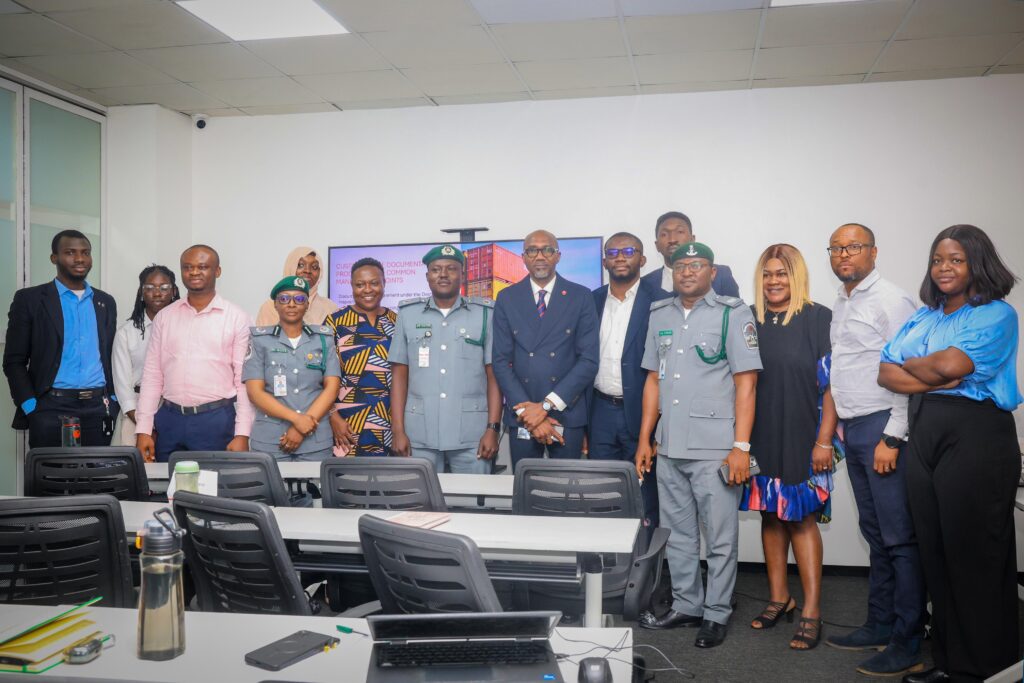
Customs Delivers Lecture on Emerging Threats in Cross Border Trade.
By Joe Njoku,
Global Freight News.
The Nigeria Customs Service (NCS) continued to demonstrate its leadership in safeguarding Nigeria’s economy and national security through capacity building and inter-agency collaboration.
The engagement, which was delivered during a sensitization lecture at the Sterling Academy Hub, located at the Sterling Bank Plaza in Abuja, aimed to educate participants on Emerging threats in Cross Border Trade- with ya particular focus on the Trade Based Money Laundering (TBTF), Trade Based Terrorism to Financing (TBTF), and Trade Based Proliferation Financing ( TBPF).
The lecture, themed “Emerging Threats or Trend of Trade Based Money Laundering, Trade Based Terrorism Financing, and Trade Based Proliferation Financing,” featured Assistant Comptroller Safiyanu Salihu of the Nigeria Customs Service NCS as the lead lecturer.
Her delivered an indepth presentation on the concept, vulnerabilities, and red flags associated with trade based financial crimes, drawing from both national and international experiences.
In his inaugural address, AC Salihu emphasised the growing sophistication of trade based crimes and their potential to erode economic stability and compromise national security.
“Trade Based Money Laundering and terrorism financing are not abstract threats, they directly undermine our economy and national security. That is why awareness, vigilance, and collaboration among stakeholders are crucial,” he said.
He further emphasised the pivotal role of financial institution in combating illicit trade practices.
“Banks and financial institutions are the first line of defense. By diligently reviewing transaction documents, they can identify red flags early and prevent illicit flows from going undetected,” he noted.
Additionally, Assistant Comptroller Bridget Baiye of the NCS provided. Practical guidance on identifying fake invoices are and falsified trade documents, as well as standard tools used in trade based financial services crimes.
Fake invoices often contain subtle discrepancies that differ from the originals. Paying attention to these small details can make all the difference in detecting fraudulent trade transactions,” she stated.
Representing Sterling Bank, Orlando Umoren, Group Head of Regulatory and Financial Crimes Compliance, expressed appreciation to the Nigeria Customs Service for its technical expertise and collaboration.
“This training reinforces the fact that combating financial crimes is not the responsibility of one agency alone. It requires collaboration, knowledge sharing, an continuous capacity building. At Sterling, we remain committed to implementing robust internal control and fostering partnerships with institutions like the Nigeria Customs Service to strengthen our collective fight against illicit financial activities,” he said.
Delivery the closing remark, Umoren urged participants to apply the knowledge they had acquired.
“We must move beyond awareness to application, ensuring that the lesson learned here today translate into stronger compliance practices tomorrow,” he concluded.
About The Author