
Customs Boss Adeniyi Advocates Nigeria First Initiative to Bolster Trade, National Security.
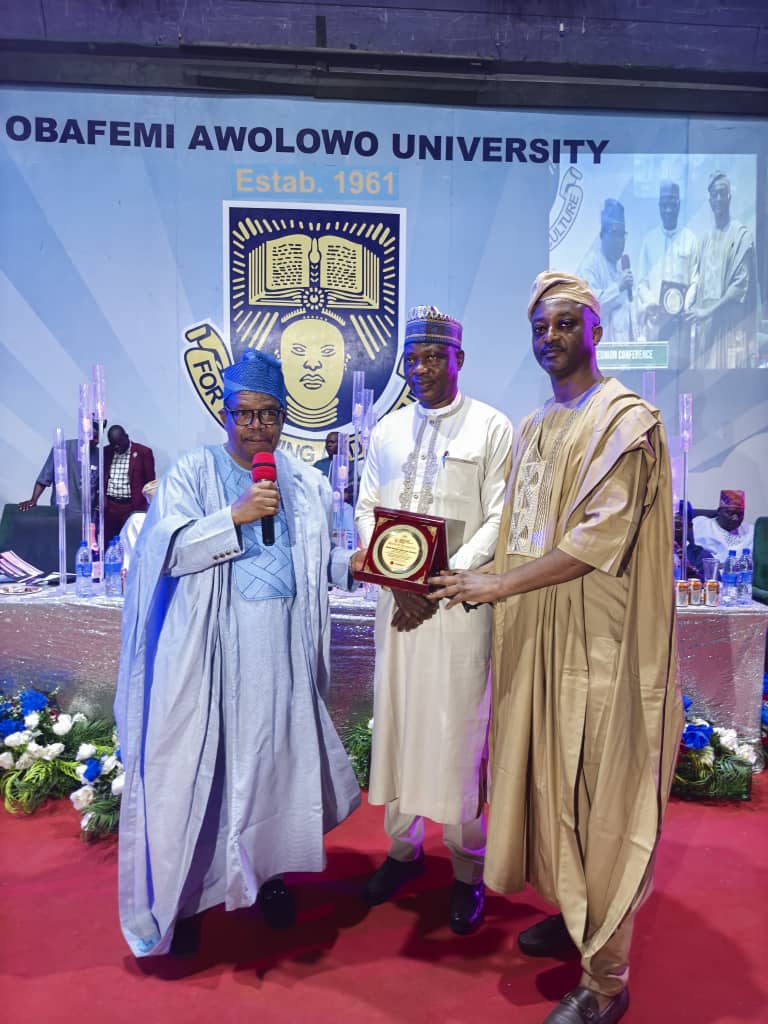
Customs Boss Adeniyi Advocates Nigeria First Initiative to Bolster Trade, National Security.
By Joe Njoku,
Global Freight News.
The Comptroller-General of the Nigeria Customs Service, Bashir Adewale Adeniyi MFR, has called for the adoption of the Nigeria First Initiative as a cornerstone for enhancing cross-border trade and safeguarding national security.
He made me call while delivering a keynote lecture at the Obafemi Awolowo University Muslim Graduate Association (UNIFEMGA) annual conference in ile-ife, Osun State, on Saturday, 10 May 2025.
Speaking on the topic “Cross-border Trade and Security Implications on the Nigerian Economy. Taking advantage of Global Trade Dynamics”.
He emphasised the need for strategic alignment between trade facilitation and Security imperatives. He revealed that Nigeria trade value surged to #196.94 trillion in 2024, making a 179.3% increase over the previous despite persistent security threats across various borders.
“Nigeria’s economy prosperity hinges delicately on our ability to strike an optimal balance between security imperatives and trade facilitation,” he said.
Highlighting the achievements of the Service, he disclosed that the NCS collected a record #6.1 trillion in revenue in 2024, exceeding it’s target by 20.2%. He described the success as a testament to the Service’s resilience and innovation in a complex operating environment.
The CGC dissected region-specific security challenges and their implication on trade in the Northeast, the insurgency continues to disrupt established trade corridors. However, he noted that collaborative initiatives such as the World Customs Organization’s Project Sécurité par Collaboration (SPC++) have provided alternative trade mechanism suited for conflict-affected areas.
In the Northwest, he pointed to the impact of banditry and kidnapping on mining operations, stressing the urgent need for integrated regulatory and Security strategies. He added that cattle rustling in northern Nigeria has crippled the livestock value chain, affecting associated industries like the meat processing and leather production.
Turning to the Southeast, he cited disruption caused by secessionist movement, particularly on manufacturing hubs in Abia, Onitsha, and Nnewi. In the Southeast, he described the smuggling of petroleum products, arms, and restricted goods as a significant threat, disclosing that contraband valued at #39.39 billion was intercepted in 2024 alone, with an additional #7.7 billion worth seized in Q1 2025.
He said, “These regional security challenges prevent Nigeria with a choice: remain trapped in a circle of reactive responses or transform our hard earned expertise into strategic advantage within the AfCFTA framework.”
The CGC explained that the Nigeria First Initiative has already taken root within the Service’s operations, particularly through the procurement of locally assembled vehicles. All operational vehicles purchased by the Service this fiscal year where sourced from Nigérian auto plants,” he said, noting that the move was a deliberate step to support domestic industries and conserve foreign exchange.
Looking forward, he unveiled a three-tier roadmap for securing and optimising border trade. Immediate interventions include the modernisation of key border post such as Seme-Krake (Benin), Jibia-Maradi (Niger), Mfum-Ekok (Cameroon). Medium-term plans involve the creation of secure trade corridors equipped with surveillance and rapid response mechanisms, while long term strategies focus on establishing Special Economic Zones around border communities.
He also addressed global trade disruption, citing the recent 14% reciprocal tariff by the United States on Nigérian non oil export as a wake-up call for market diversification. He urged the business community to leverage the $3.4 trillion African Continental Free Trade Area (AfCFTA) opportunity and embrace innovation such as the Pan-African Payment and Settlement system (PAPSS), which allows intra-African trade using local currencies.
Through systematic application of these principles, Nigéria can establish itself as the secure gateway to West African markets, leveraging security investment to strengthen our economic position in regional and global trade,” he concluded
The lecture was delivered in the presence of prominent dignitaries, including the Governor of Osun State, His Excellency Senator Ademola Adeleke, the Ooni of Ife, His Imperial Majesty Oba Adeyeye Enitan Ogunwusi, and the Vice Chancellor of Obafemi Awolowo University, Professor Adebayo Simeon Bamire.
About The Author